

Johanna’s doctoral research focuses on quality improvement for trauma care in India
Johanna Berg, PhD and an emergency physician in Malmö, recently defended her thesis on improving trauma care in India. From software development to global health research, her journey bridges clinical work and health systems. Learn what drives her passion and why her best advice is to make time for reflection.
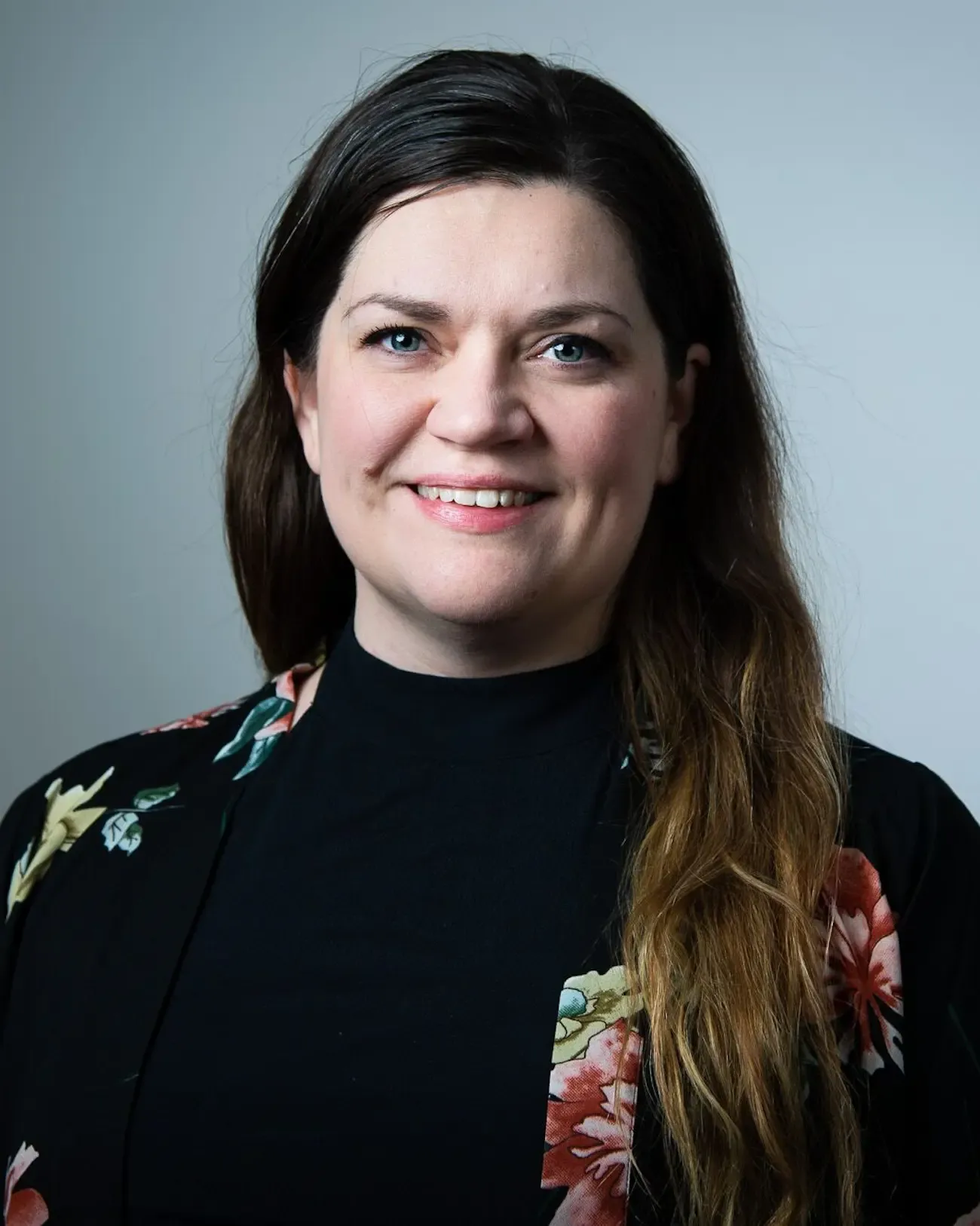
Johanna Berg, PhD
Research group: Health Systems and Policy
Supervisor: Martin Gerdin Wärnberg
Thesis title: Navigating uncertainty: Trauma quality improvement in urban India
Congratulations on successfully defending your thesis – how does it feel?
Thank you! It really feels great. I had a lovely public defence. My opponent, professor Jeffery Braithwhite from Macquarie University in Australia, has done so much work in this area and he facilitated a really interesting and thoughtful discussion.
You are an emergency physician in Malmö. Tell us about your background and how you came to choose to do your PhD at GPH and KI.
I grew up in Stockholm, and I have always had diverse interests, from natural sciences to the humanities. I worked in software development in my early twenties and then went to medical school in my mid-twenties. With broad interests, emergency medicine and global health quickly became areas that attracted me. I did a summer course in Global Health at GPH during medical school, which gave me a good introduction to the field.
I always wanted to work abroad, but I also wanted to understand that kind of work better, so research became a natural progression. Since I wanted to focus on global health/disaster medicine, I reached out to Johan von Schreeb and, through him, met my main supervisor, Martin. It has been a fantastic environment with people from many different backgrounds.
What was the focus of your doctoral project?
My project is about quality improvement for trauma patients in India. Trauma is the condition responsible for the highest number of quality-related deaths in low and middle-income countries, and understanding how we can improve trauma care is essential. Clinical medicine is also a fundamentally uncertain science, which urges us to think about how improvement can support the providers in the system they work in.
We implemented a program to continuously collect data on trauma patients and highlight cases for discussion in multidisciplinary teams, to learn and improve care. We found that mortality declined after the program was implemented. To better understand how the program worked, we interviewed participants who were part of the multidisciplinary discussions. It seems like seeing the whole chain of care for patients is very important for providers to understand the system they work in, and through that, learn and improve care.
What has been the most rewarding aspect of being a doctoral student at GPH?
The environment and the people. I have had the opportunity to get to know people from all over the world, working in different disciplines and with different backgrounds. I combine qualitative and quantitative methods, and doing interdisciplinary work is immensely fruitful.
You defended your thesis in November. What are you hoping to do next?
I will continue to be affiliated with GPH, and I hope to continue to do research in the intersection between health systems, emergency medicine and global health while combining this with clinical work at the emergency department in Malmö.
How has it been combining work with doctoral research?
It has both challenging and rewarding sides. It is challenging to switch between two such different environments, and at the same time, it has helped me keep perspective on both worlds. Research has helped me better understand my clinical work, and my clinical work keeps the research grounded and connected to something very real and close to home, even though the study itself was on the other side of the world.
Your best advice to new doctoral students at KI and GPH?
Make time for reflection. Not everything in research can be measured in productivity. Find things in your research that you enjoy and are curious about, and look for ways to explore them. Think about what is important and why. Get to know and exchange ideas with the people around you, especially those with different backgrounds and perspectives. You learn a lot from that. And if you have a chance to take a course in the philosophy of science, take it!