
In memory of Anita Aperia (1936–2025) – doctor, researcher and academic leader

Karolinska Institutet has lost an outstanding and dedicated colleague. Professor emerita Anita Aperia has passed away after a period of illness. She was active at KI from her studies in the 1950s up to her last scientific paper, which was published in the spring of 2025.
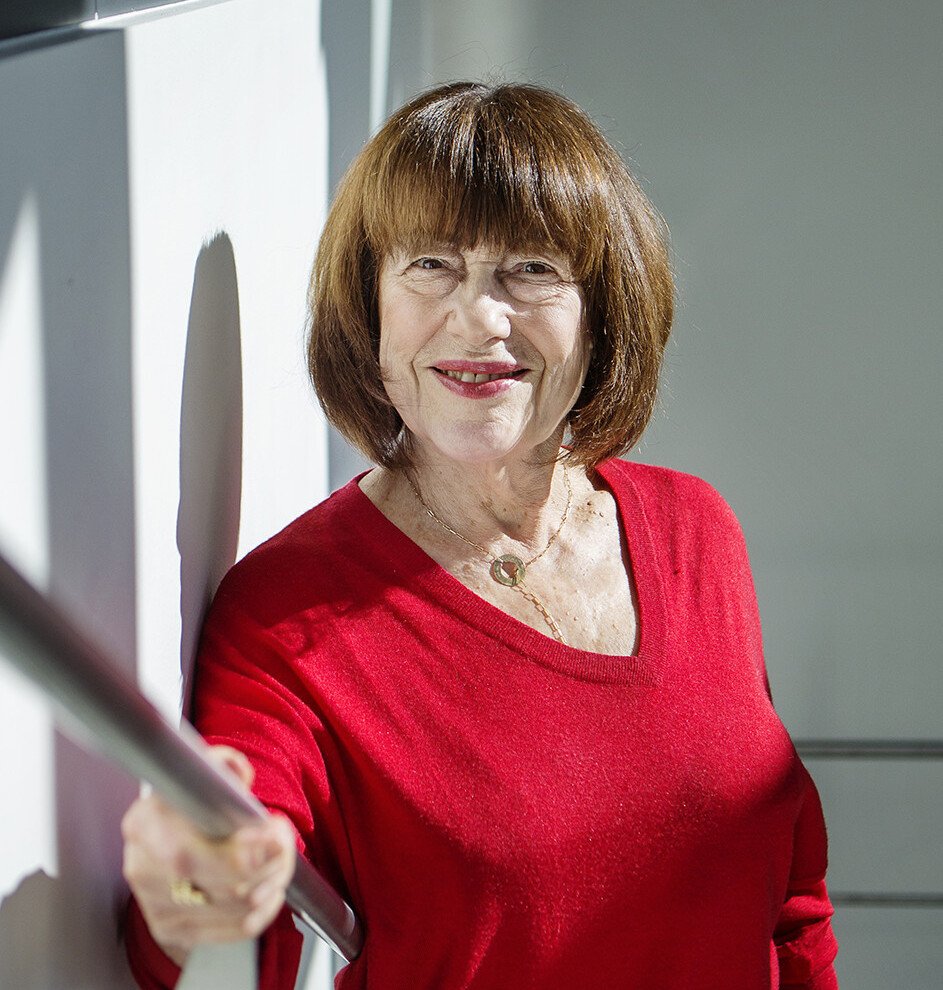
Anita Aperia began her time at Karolinska Institutet as a medical student in the 1950s, and remained faithful to her alma mater for the rest of her career. She was Professor emerita at the Department of Women’s and Children’s Health, where she had been a clinically active professor for many decades.
Anita Aperia’s research centred on the body’s salt and fluid balance, with a particular focus on the sodium-potassium pump in the cell membrane and how it regulates electrolyte homeostasis. This pump is essential to many vital cell functions, which is reflected in the fact that it accounts for as much as a third of the body’s energy consumption. In the kidneys, the pump controls the excretion and absorption of salt and water. Her work, which was often motivated by issues that arose when interacting with patients at the paediatric clinic, helped to improve the understanding of physiological processes and their role in health and disease.
During her long career, she published a great many scientific papers on such subjects as how the Na-K pump operates and how it is regulated in different physiological and pathological conditions in organs like the kidneys and brain. Alongside her research, Anita Aperia held several positions of leadership. She was assistant dean at Karolinska Institutet and was instrumental in the establishment of the medical research programme (LäFo), which aimed to combine medical education and research. She was also a long-standing member of the Nobel Committee and one-time chair of the Nobel Assembly. She was the recipient of many international and national awards, including the Karolinska Institutet Grand Silver Medal and the Söderberg Prize in medicine.
Anita Aperia was especially passionate about the care of children, and was extremely proud of her work as a specialist in paediatrics. She was a driving force behind the merger of the paediatric clinics at St Göran’s, Danderyd and Karolinska hospitals, and it was to her absolute credit that the Astrid Lindgren Children’s Hospital could open in 1998.
Anita Aperia was active as a clinician and researcher, a parallel role that is often referred to as “physician-scientist” and considered her work in the laboratory and in the clinic as two mutually beneficial sides of the same coin.
Arguably one of the most lasting impressions that Anita Aperia made at KI was as a supervisor and mentor. She guided a large number of doctoral students and postdocs with her tireless pursuit of renewal. With great acumen, she identified and combined skills and methods from disparate scientific disciplines to solve complex medical problems. This multidisciplinary approach became a powerful source of inspiration and pointed the way for how modern research can be conducted. In this way, she nurtured several generations of clinical and preclinical researchers. Her scientific legacy and the curiosity that she spread will live on through those she inspired and mentored, and will continue to shape research at Karolinska Institutet and elsewhere for a long time to come.
Her drive and scientific curiosity never left her. Anita Aperia was active in many research projects into her final years, and she published her last scientific paper as recently as the spring of 2025. Her life’s work spans seven decades and through her research, teaching and leadership, she has left an indelible imprint on Karolinska Institutet and the field of medical science.
Annika Östman Wernerson, Hjalmar Brismar and Kristina Gemzell Danielsson on behalf of friends, colleagues and researchers at Karolinska Institutet, Karolinska University Hospital and the Nobel Assembly/Nobel Committee.