
Improved maternity care linked to fewer deaths
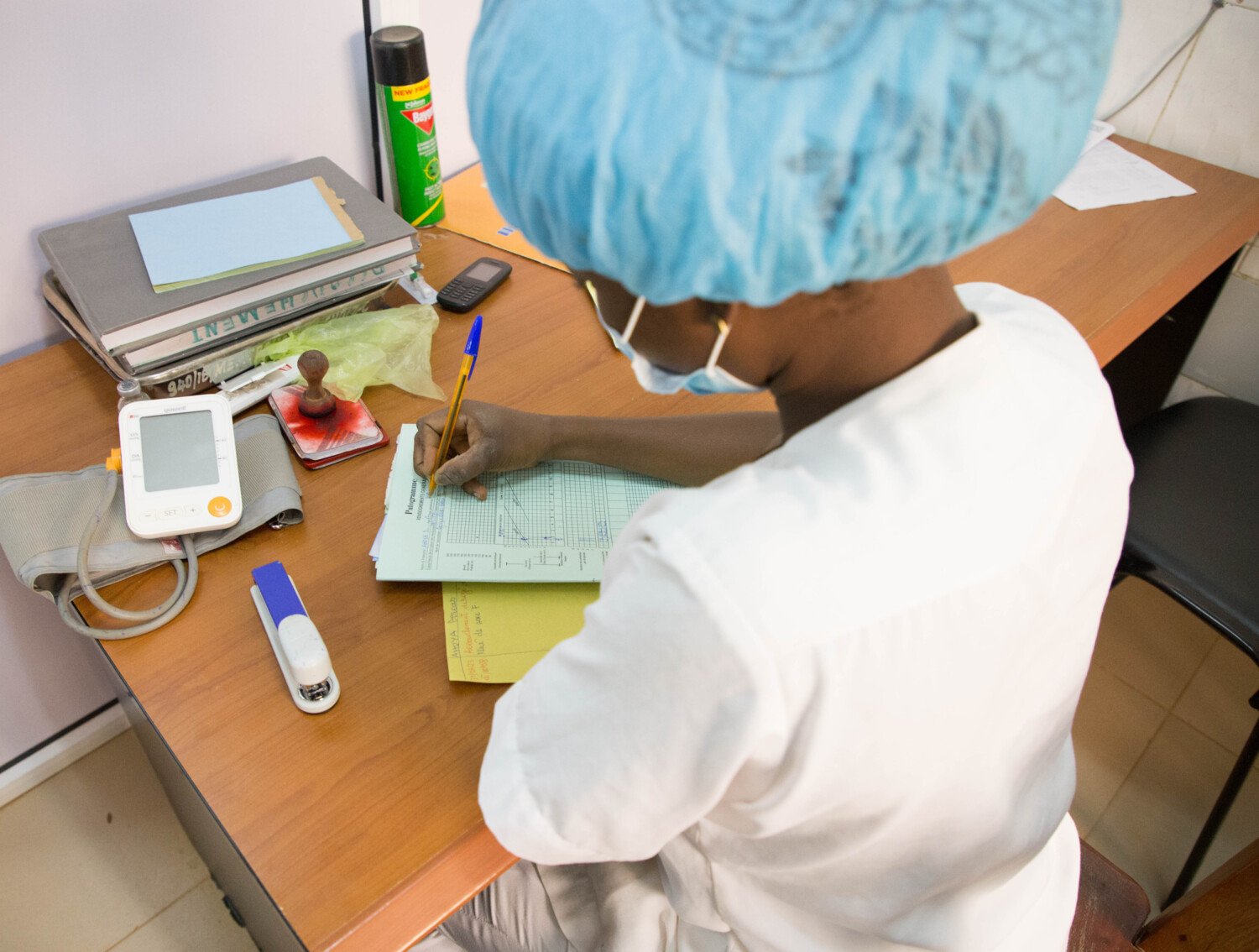
A combination of training, quality improvement and leadership support in hospitals across four countries in sub-Saharan Africa is linked to fewer stillbirths and deaths among newborns during the first 24 hours of life. This is shown by a study led by Karolinska Institutet and published in Nature Medicine.
Despite major advances in maternal and child healthcare, the risk of a child dying during labour or shortly after birth remains very high in several countries in sub-Saharan Africa. To improve care during labour, researchers within the ALERT project developed an intervention combining several different elements.
The work began with a process known as co-design, in which women, families and healthcare staff jointly identified needs and barriers in care. Based on this, training programmes were developed for midwives and other maternity staff. Hospitals also received support for their quality improvement work, and managers in the maternity wards were offered mentoring.
The study was carried out at 16 maternity units in Benin, Malawi, Tanzania and Uganda. A total of 134,630 women and 139,300 newborns were included. To monitor the results, the researchers set up a digital perinatal register based on the birth registers used in countries such as Sweden. The register was used both for research and to provide feedback to healthcare staff during the course of the project.
22 per cent lower risk of perinatal death
The results show that the chance of early perinatal death, defined as stillbirth or death within the first 24 hours of life, fell by 22 per cent following the introduction of the ALERT programme. The researchers also observed a 19 per cent reduction in oxygen-deprivation-related complications among newborns.
Sub-Saharan Africa is the region of the world where the highest number of babies are stillborn. Around one million children show no signs of life at birth every year, and the risk of a child dying during childbirth is around 40 times higher than in Europe.
The loss of a child often causes great suffering for families and can lead to feelings of guilt, shame and social vulnerability, explains Claudia Hanson, professor at the Department of Global Public Health, Karolinska Institutet, and the study’s principal investigator.

”This inequality is unacceptable. Our findings show that it is possible to reduce mortality and morbidity among newborns by improving the quality of maternity care, optimising working practices and strengthening care teams and leadership, even in settings where resources are limited and midwives work under high pressure. The study offers hope and presents a model that can be applied in other places too,” she says.
The researchers also observed that foetal heart rate monitoring improved during the study and that the proportion of caesarean sections increased slightly. According to the researchers, this may indicate that complications were detected earlier and that healthcare staff were more often able to take timely action.
The next step is to investigate how improved monitoring of the foetus during labour can contribute to further improvements.
”We believe that better support for interpreting signs of foetal distress during labour can help to further reduce the still-high mortality rate. We therefore want to develop new approaches, potentially also using AI-supported descion-support systems and improved guidelines in collaboration with healthcare staff,” says Claudia Hanson.
See the study for details of funding bodies and any conflicts of interest.
Publication
“A multi-faceted hospital-based intervention for intrapartum care in Sub-Saharan Africa: a step-wedge, cluster-randomised trial”, Claudia Hanson, Joseph Akuze, Kristi Sidney Annerstedt, Helle Mölsted Alvesson, Sunjuri Sun, Manuela Straneo, Nicola Orsini, Lenka Benova, Mechthild M. Gross, Bruno Marchal, Rian Snijders, Effie Chipeta, Peter Waiswa, Hussein Kidanto, Jean-Paul Dossou, Andrea Barnabas Pembe, Nature Medicine, online August 26, 2026, doi: 10.1038/s41591-026-04599-w.