
Cultural Beliefs and Birth Practices: PhD Project Probes Obstetric Puzzles in Vietnam
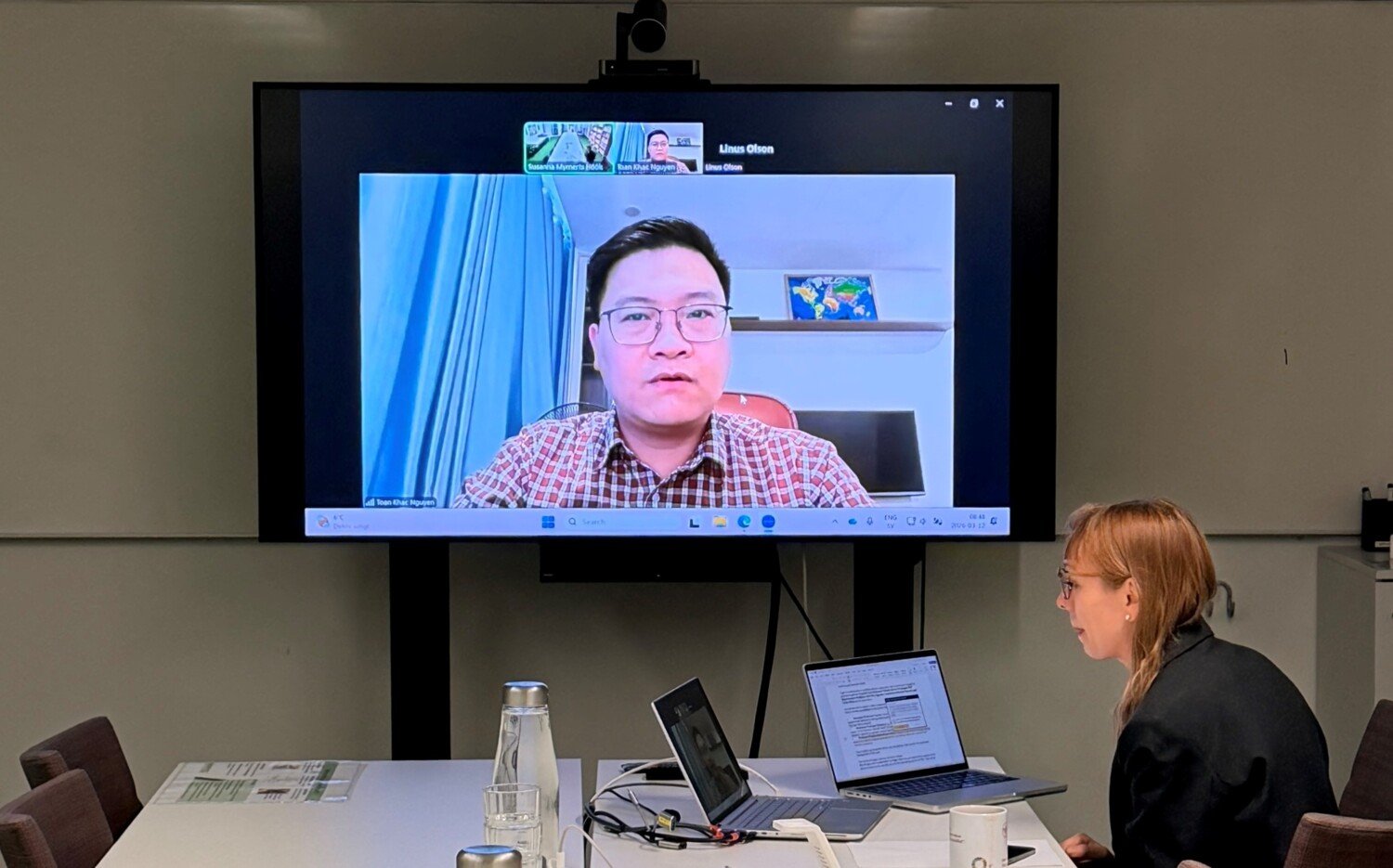
PhD candidate Toàn Khac Nguyen recently completed his half‑time review. In this interview, he reflects on his research into the cultural and clinical dynamics that shape childbirth practices, including the puzzling combination of very high caesarean rates and low reported newborn complications in Hanoi.
Congratulations on passing your half-time review! Could you give a short overview of your PhD project?
Thank you very much. My doctoral project, titled “Obstetric Care Challenges: Experience from Two Large Obstetric Hospitals in Vietnam and Sweden”, explores what is essentially a clinical puzzle.
At Phu San Hanoi Hospital, we have observed a striking contradiction. More than half of all babies are delivered by caesarean section, yet only 0.61% of newborns are recorded as needing immediate breathing support at birth. Globally, this figure is usually between 3% and 10%. My research aims to understand why this difference exists. Is it because medical interventions are preventing problems, or could it be due to incomplete recording or cultural influences?

The project examines four key areas: how cultural beliefs—such as choosing “auspicious” birth dates based on lunar calendar—influence scheduling; how high caesarean rates affect newborn outcomes; how workplace culture and organisational pressures shape clinical decision‑making; and how Vietnam’s doctor‑led obstetric model compares with Sweden’s midwife‑led system to identify ways to improve patient safety.
What key insights or findings have emerged so far?
We found that fewer babies were born on days considered “inauspicious” compared with other days. This was mainly because many planned caesarean sections were postponed, with their number almost cut in half on these dates. As a result, the hospital often had fewer patients than usual on inauspicious days but became very crowded on the following days. In fact, overcrowding was nearly seven times more likely on non-inauspicious days. These predictable swings can put pressure on staff and resources and may increase the risk of mistakes when the workload is high.
“Overall, this project aims to better understand how cultural beliefs and healthcare systems shape childbirth outcomes, and to contribute to global efforts to improve the health and survival of mothers and babies”
We also found that only low-risk pregnancies were able to avoid these “unlucky” days. Although the percentage of newborns with lower Apgar scores was slightly higher on inauspicious days, the actual number of such cases per day was about the same. This suggests that healthier pregnancies were rescheduled, while more complicated or high-risk cases still needed to deliver as medically required. As a result, there was a higher concentration of more serious cases on inauspicious days.
Looking back at your first years as a PhD student, which moments stand out as especially valuable or rewarding?
One of the highlights of this period was presenting my research at the 33rd World Congress of Controversies in Obstetrics, Gynaecology and Infertility (COGI) in Rome, Italy, in November 2025. It was a valuable opportunity to engage with leading experts in the field and to exchange ideas.
During the first half of my doctoral training, besides my excellent supervisors, I have had the opportunity to meet many fellow PhD students from around the world who are both knowledgeable and kind. Building friendships with them has broadened my perspective and exposed me to a wide range of approaches to the same problem. I am very grateful for these discussions.
Toàn Khac Nguyen successfully passed his half-time review on 12 March.
The review committee consisted of:
Associate Professor Lê Thị Anh Đào, Hanoi Medical University, Vietnam
Associate Professor Donghao Lu, IMM, Karolinska Institutet
Professor Pauliina Damdimopoulou, KBH, Karolinska Institutet
Main supervisor: Susanna Myrnets Höök, GPH, Karolinska Institutet.
Co-supervisors:
Professor Tobias Alfvén, GPH, Karolinska Institutet
Dr. Nicolas Pejovic, GPH, Karolinska Institutet
Professor Olof Stephansson, MedS, Karolinska Institutet
Professor Anh Duy Nguyen, Department of Obstetrics and Gynecology, Hanoi National University, Vietnam
Dr. Linus Olson, KBH, Karolinska Institutet