
Community Visions for Tomorrow: PhD Students Contribute to Earth Day 2026 Dialogue
On Earth Day 2026, the Student Association for Sustainability hosted a conference featuring lectures and an interdisciplinary panel discussion under the theme Community visions for tomorrow. Three PhD students from the Global Child Health & the Sustainable Development Goals group contributed by sharing research insights and engaging in discussions on sustainability, health equity, and climate vulnerable contexts.
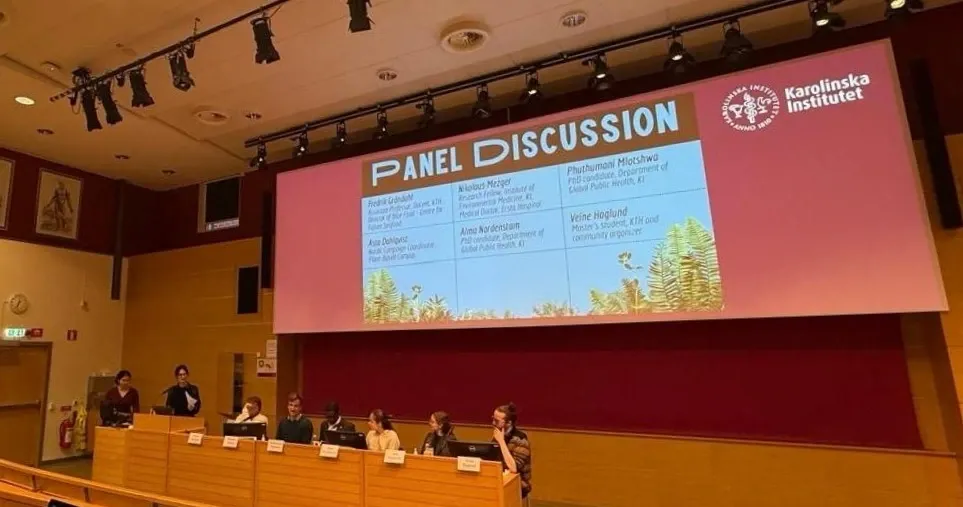
The Student Association for Sustainability marked Earth Day 2026 by organising a conference on 22 April, featuring lectures and an interdisciplinary panel discussion on sustainability, under the theme “Community visions for tomorrow.”
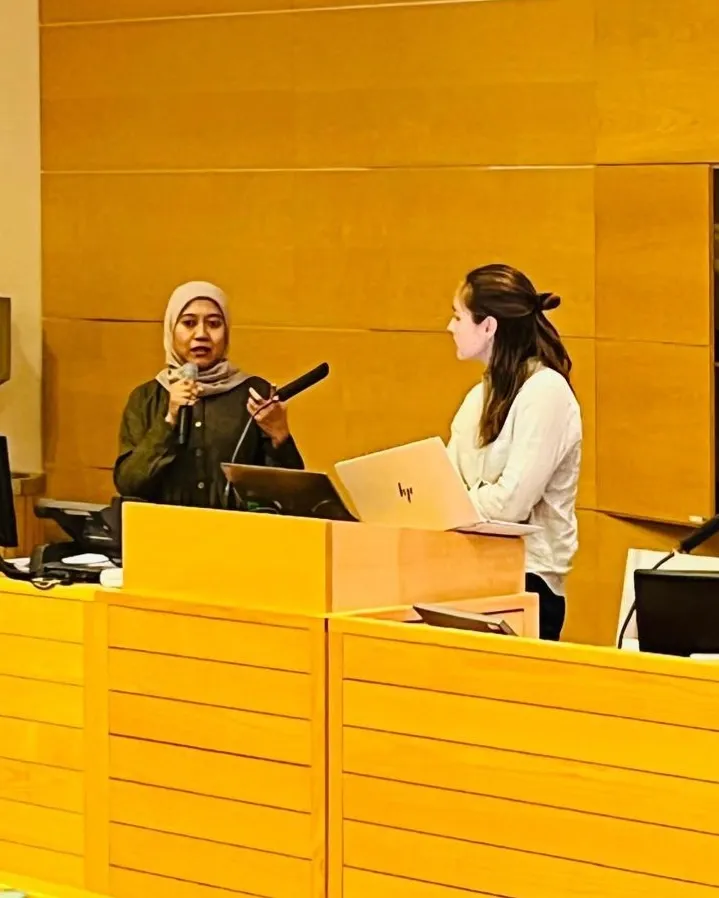
PhD students Wurry Ayuningtyas, Phuthumani Mlotshwa, and Alma Nordenstam took active part in the event. Ayuningtyas and Nordenstam delivered a lecture titled “MAPPING,” in which they discussed their research on mapping mortality patterns in East Java.
Mlotshwa and Nordenstam also participated in the panel discussion, which brought together researchers from the Royal Institute of Technology (KTH), movements to improve sustainability practices in universities, among others.
During the panel, participants highlighted that health systems which fail to recognise healthcare as a public good often address inequality in fragmented ways, resulting in inefficiencies and uneven outcomes. These shortcomings are particularly evident in climate‑vulnerable contexts, where environmental pressures further limit access to care—for example through flooding in Indonesia or restricted access to essential medicines and in‑vitro diagnostics in parts of Africa.
Local Knowledge and Sustainable Solutions
Panelists noted an important shift in how solutions are developed: rather than being imposed by high‑income countries, effective responses are increasingly generated locally, in partnership with international actors. While academic institutions play a critical role as custodians of evidence for sustainable change, research conducted in climate‑vulnerable communities should also be understood as a learning opportunity—allowing researchers to draw insight from local knowledge on what works in practice.
In discussing global roles and responsibilities, the panel emphasized that both high‑income countries and low‑ and middle‑income countries have a part to play in addressing persistent health inequities. Dependence on aid alone was seen as incompatible with true solidarity, yet rising nationalism was equally identified as a barrier to sustainable progress. Instead, panelists called for a renewed model of solidarity – one grounded in partnership, shared responsibility, and long‑term sustainability.