

Chronic bowel disease involves multiple types of inflammation happening at once
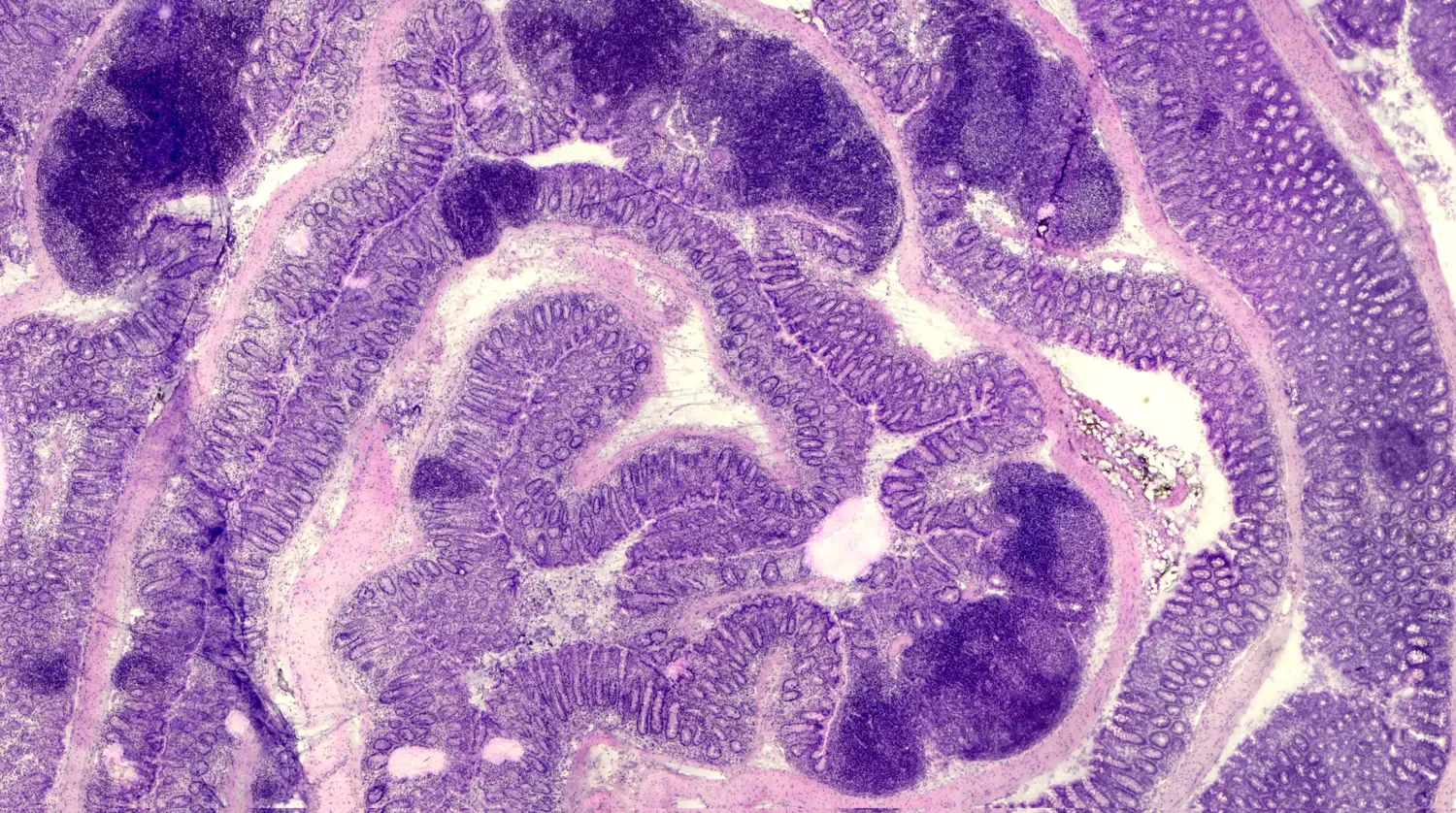
Chronic immune diseases are shaped by multiple inflammatory processes happening at the same time, each in different parts of the tissue. This is shown in a mouse study from Karolinska Institutet, published in the journal Immunity. The findings may help explain why patients respond differently to treatment.
Inflammation is often described as a uniform phenomenon. But in the new study, the researchers examined chronic inflammation in the mouse colon and found that the picture is more complex. By combining several types of gene analyses with so‑called spatial transcriptomics – a method that reveals which genes are active in different parts of the tissue – they were able to track how the inflammation evolved over time.
The study included more than 450,000 analyzed cells from two different animal models of chronic colitis. Early on, the researchers observed an increase in immune cells such as CD4⁺ T cells and neutrophils, while the epithelial cells of the intestine began activating genes that help them detect and respond to harmful signals.
Multiple inflammatory programmes identified
However, the most important finding was that the inflammation occurred in several distinct forms. The researchers identified at least three separate “inflammatory programs” that were active in different regions of the colon. One program was found in the part of the intestine closest to the small intestine, another further down in the colon, and a third in areas where immune cells gather into small structures resembling local immune stations.

“We found that the intestine does not have just one type of inflammation, but several, occurring simultaneously in different parts of the tissue. This may be a missing piece in understanding why some patients respond well to a treatment while others do not,” says researcher Eduardo Villablanca at the Department of Medicine, Solna, Karolinska Institutet.
When the mice were treated with an antibody that blocks an inflammatory molecule, IL‑12, the activity in all these programs decreased. This was followed by a reduction in immune cells and a calming of the intestinal epithelium.
“This shows that the treatment does not extinguish all inflammation in the same way. It affects several programs at once, which may offer new clues for designing future therapies,” says Eduardo Villablanca.
The researchers also compared gene expression in the mouse models with previously published data from individuals with ulcerative colitis and Crohn’s disease. The analysis shows that several key inflammatory pathways are similar between mice and humans, suggesting that the findings may be relevant to human disease.
The study is a collaboration between Karolinska Institutet, Roche, and SciLifeLab. The research has been funded by, among others, the Swedish Research Council, the Swedish Cancer Society, the Knut and Alice Wallenberg Foundation, and the European Research Council. The researchers report consultancy work and research support from several pharmaceutical companies in the scientific article.
Publication
"Spatiotemporal analysis reveals distinct inflammatory programs underlying chronic colitis", Jennifer Fransson, Chiara Sorini, Francisca Castillo, Yuhao Chi, Ning He, Martin Suarez-Alvarez, Maria Alejandra Ulloa, Rodrigo A. Morales Castro, Ali Okhovat, Hailey Sounart, Chiara Zagami, Rebeca F. Cardoso, Srustidhar Das, Stefania Giacomello, Anna Mechling, Charlotte R.H. Hedin, Philip Smith, Eduardo J. Villablanca, Immunity, online 6 May 2026.